
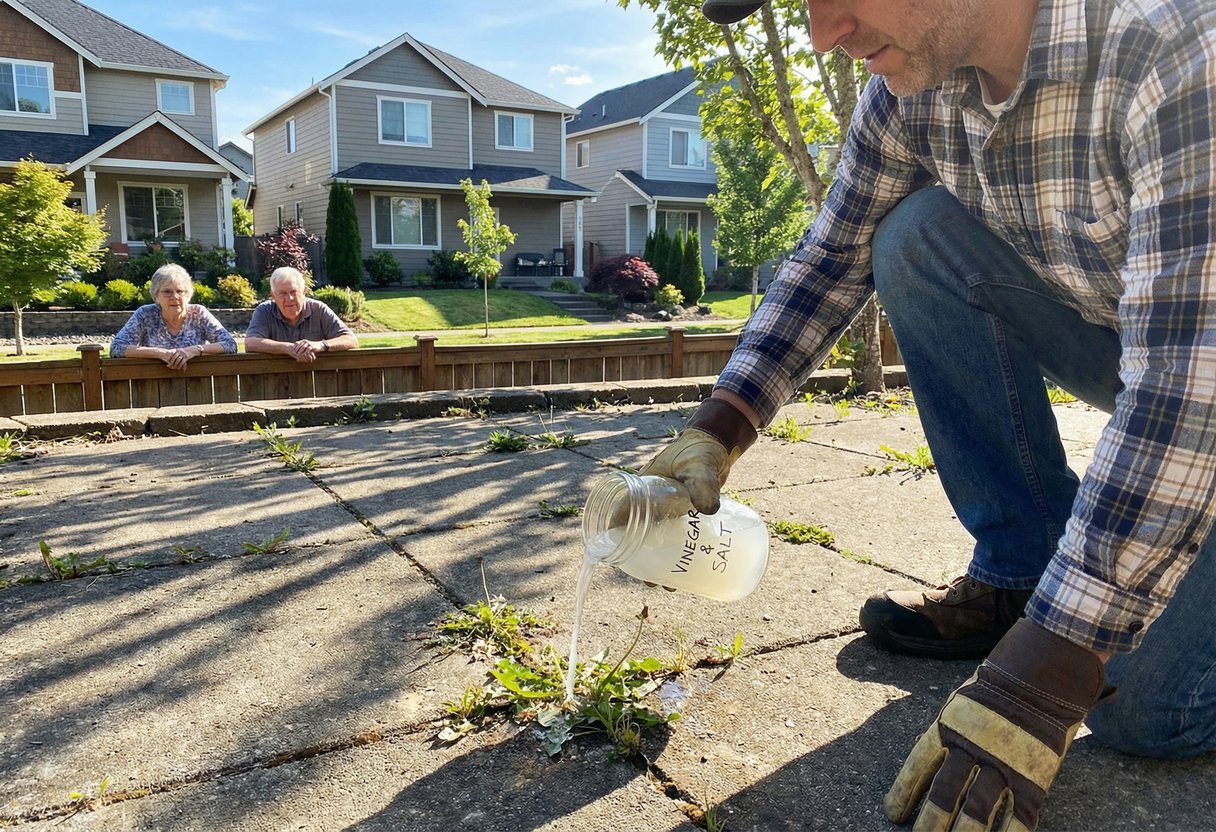
The cracks between patio slabs burst with opportunistic green, and homeowners are running out of patience. On one quiet street, a simple natural fix turned a single backyard trial into the talk of the block within a day. It promises quick results without the harsh bite of conventional chemicals, and it hardly touches the household budget. What matters now is how it works, the care it demands, and what it means for the slabs underfoot and the life in the soil.
a stubborn problem on the patio floor
After spring rains, tiny seedlings wedge between pavers and colonize hairline seams. Pulling them bends the back and rarely lasts beyond a week. Soon the joints look like miniature planters again, a tidy surface undone by weeds between the joints.
- Unable to find buyer, they offer their 1,400-square-foot apartment in a 10-dollars raffle
Unable to find buyer, they offer their 1,400-square-foot apartment in a 10-dollars raffle
- Don’t cut down your dead trees, they’re essential for the survival of many bird species
Don’t cut down your dead trees, they’re essential for the survival of many bird species
Store aisles brim with chemical herbicides, yet many homeowners hesitate. Municipal rules tighten, pollinators need protection, and patios abut vegetable beds. So the search shifts to simple, kitchen-shelf options that work without drenching the entire slab.
the simple mix that changes everything
One neighbor tried a small experiment: table salt plus white vinegar. Within 24 hours his grout lines turned straw-yellow, then crisp. Curious faces peered over the fence; by dusk, several households were mixing their own batch.
The recipe is plain: 2 cups white vinegar to 1 cup salt. Stir until dissolved and pour directly on unwanted foliage, aiming only at the cracks. Pick a warm, sunny window; heat accelerates drying, helping the solution collapse soft, young growth.
how does it work exactly?
The method’s punch lies in osmotic pull. Salt creates a hypertonic film, drawing water out of plant cells until they collapse. Meanwhile, acetic acid in vinegar etches the leaf cuticle and disrupts membranes, compounding the dehydration.
Results show quickly on seedlings and annual weeds. Hours later, leaves dull and droop; around 24 hours, most turn brittle. Deep-rooted perennials may resprout, but repeated, careful spot hits can starve the crown over time.
use with care: risks and responsible application
Natural doesn’t mean benign. Salt lingers, can harm nearby ornamentals, and degrades soil structure if overused. Runoff after a storm may carry the brine toward beds, where it stresses microbes and earthworms.
Guides advise restraint: spot treat, don’t broadcast. Work on small patches, keep the stream narrow, and avoid rainy forecasts. Skip lawns, permeable gravel paths that drain into borders, and any area you might want to plant later.
- For just €7, this IKEA sensor instantly alerts you when a door or window is opened
For just €7, this IKEA sensor instantly alerts you when a door or window is opened
- I thought my orchid was doomed until this trick revived its bloom in 24 hours
I thought my orchid was doomed until this trick revived its bloom in 24 hours
staying in balance with nature
There are gentler tools when you want fewer trade-offs. Try a wire brush, boiling water for tiny patches, or a flame weeder on stone. Regular hand-pulling after rain works too, when roots release easily. Each option trims the chemical and salt footprint.
Choose what fits your patio and your neighbors’ gardens. Tend the cracks with intention, and small habits add up across a season. Clean joints invite conversation—and sometimes, as on that tidy block, the whole street takes notice.