
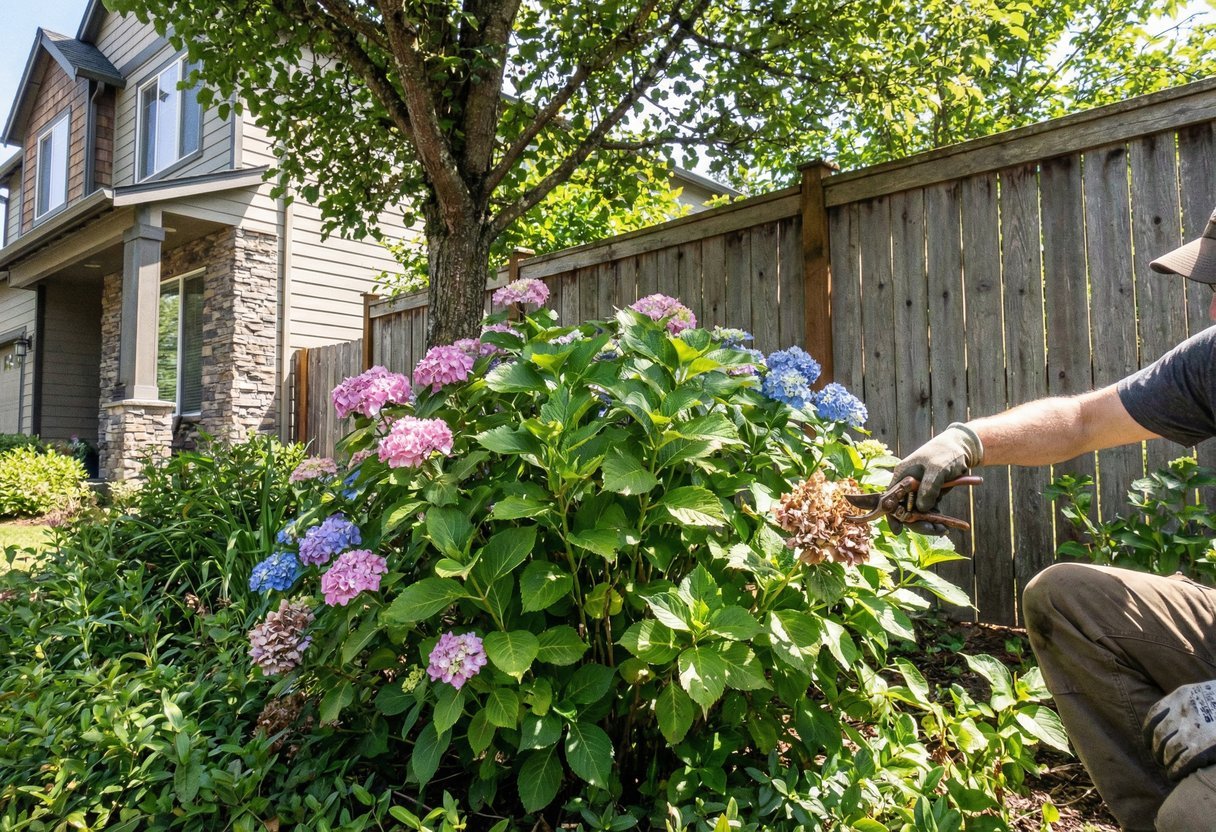
Bloomless hydrangeas are baffling when the shrubs look healthy and the border is well kept. The trouble often starts months earlier, with a well-meant pruning habit that quietly sabotages the display. What you cut, and when you cut it, depends on how each hydrangea builds its flower buds, from bigleaf and oakleaf to panicle and smooth types. Get the timing and technique right, and you swap disappointment for a summer of showstopping heads, even after a brush with cold.
The mistake that can cost your hydrangeas their blooms
On a mild April morning, the shrubs look perfect: lush leaves, sturdy stems, borders trimmed with care. And yet, almost no blooms. For countless gardeners, the culprit is simple timing. Pruning in midwinter strips away the very buds that would color your garden months later. Why does a neat winter trim backfire?
- Unable to find buyer, they offer their 1,400-square-foot apartment in a 10-dollars raffle
Unable to find buyer, they offer their 1,400-square-foot apartment in a 10-dollars raffle
- Don’t cut down your dead trees, they’re essential for the survival of many bird species
Don’t cut down your dead trees, they’re essential for the survival of many bird species
What winter pruning does
Hydrangea macrophylla and Hydrangea quercifolia set their flower buds on last year’s growth—on so-called old wood. Those buds form by late summer and sit at the tips through the cold season. Cut in winter and you remove them outright, or expose them to freeze–thaw damage that kills the blooms while sparing the leaves. The result is familiar: vigorous greenery, but a summer without the fireworks you expected.
Choose a pruning method that fits your hydrangea
Not every hydrangea wants the same haircut. Macrophylla and quercifolia prefer a light touch right after flowering, in late summer or very early fall: remove spent heads and dead wood, then stop. Avoid cutting into the framework or tip growth that carries next year’s buds. Hydrangea paniculata and Hydrangea arborescens bloom on new wood, so you can prune them in late winter or early spring to shape and encourage strong new shoots.
Smart tips for protection and spring cleanup
Leave those papery flower heads on older-wood varieties through winter; they act like tiny shields against wind and frost. Add a mulch layer of 4–6 inches around the base to buffer temperature swings and preserve moisture, keeping material away from the stems. When danger of hard frost has passed, switch to gentle deadheading: snip just below the spent bloom, above the first healthy pair of buds. Keep fertilizers balanced; excess nitrogen pushes leaves at the expense of flowers.
- For just €7, this IKEA sensor instantly alerts you when a door or window is opened
For just €7, this IKEA sensor instantly alerts you when a door or window is opened
- I thought my orchid was doomed until this trick revived its bloom in 24 hours
I thought my orchid was doomed until this trick revived its bloom in 24 hours
More flowers through knowledge and restraint
The surest way to more hydrangea blooms is restraint with the pruners when it’s cold, matched with attention to the plant you actually grow. Identify the species, mind the calendar, and let the buds ride out winter under their natural armor. Come July, patience pays off in heavy, luminous heads that make the whole border feel complete.