
White vinegar is a staple of eco minded cleaning, yet its acid bite can quietly punish the very home it is meant to protect. Certain finishes are more vulnerable than you think, and its germ fighting reputation is shakier than social media suggests. As warnings mount from cleaning specialists, the real test is knowing where it works, where it fails, and when a different approach is safer. Before the next swipe, a little caution could save both shine and money.
The downside of white vinegar as a cleaning staple
You spritz white vinegar across a stainless fridge and the smudges vanish; it feels efficient and green. But is it really a cure-all? Specialists increasingly caution that vinegar’s acidity can dull, etch, or pit sensitive surfaces and that it rarely delivers the germ-killing punch many assume.
- Unable to find buyer, they offer their 1,400-square-foot apartment in a 10-dollars raffle
Unable to find buyer, they offer their 1,400-square-foot apartment in a 10-dollars raffle
- Don’t cut down your dead trees, they’re essential for the survival of many bird species
Don’t cut down your dead trees, they’re essential for the survival of many bird species
That gap between perception and performance matters in busy homes. Used indiscriminately, vinegar can quietly shorten the life of finishes and appliances while giving a false sense of pristine cleanliness.
Vulnerable surfaces you should avoid
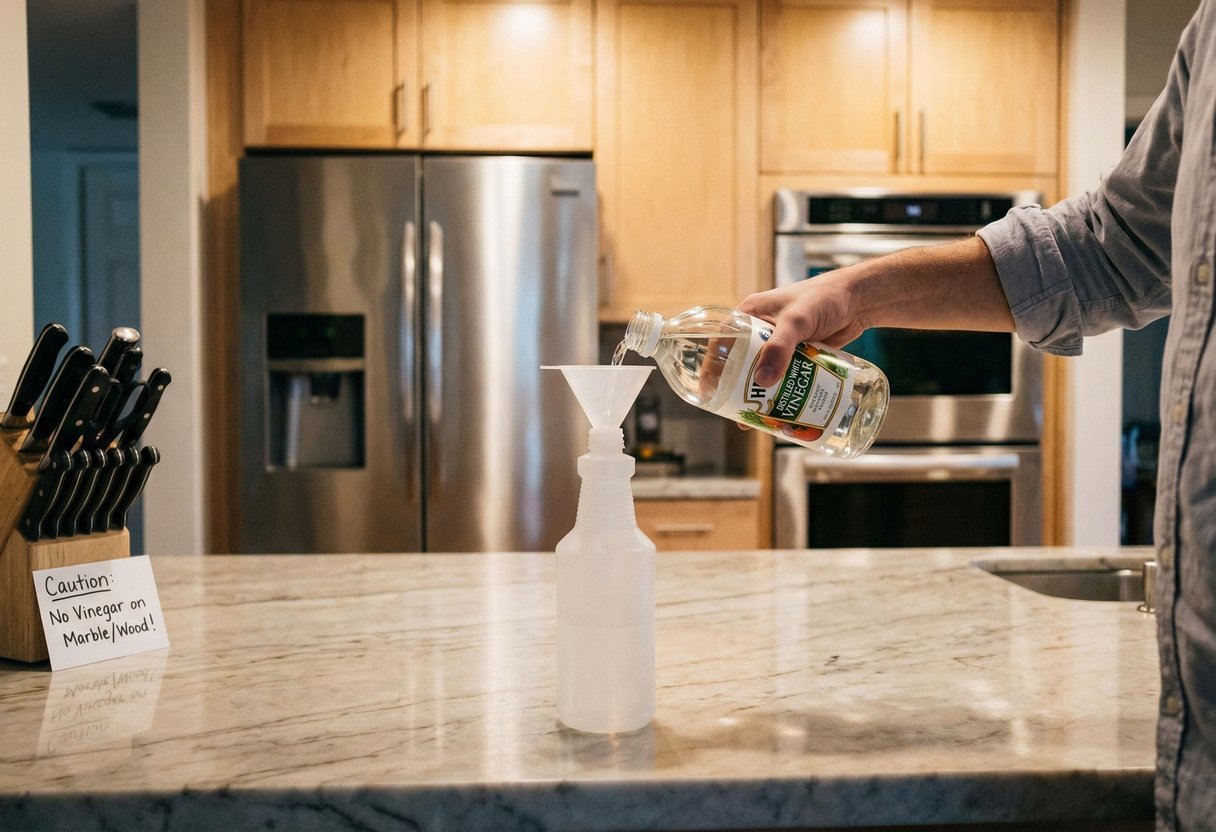
Natural stone is the first red line. On marble, travertine, limestone, and even some granite, acetic acid can cause etching: microscopic dull spots that spread over time. Unsealed grout can also be weakened, making stains and moisture intrusion more likely.
Wood floors dislike acid too. Repeated vinegar mopping can haze polyurethane finishes and raise the grain, inviting warping. Stainless steel can develop tiny pits, while rubber gaskets in washers and dishwashers may dry and crack faster. Keep vinegar away from coated screens and touch panels, where it can strip protective layers.
Real hygiene starts elsewhere
Household white vinegar is typically around 5 percent acetic acid. it can dissolve mineral deposits and cut light soap scum, but it is not a broad-spectrum disinfectant and does not reliably kill 99.9 percent of common germs. On food-prep zones or after handling raw meat and eggs, that matters.
For high-touch and food contact areas, use hot soapy water to clean, then a registered disinfectant when needed. Reserve vinegar for tasks where its strengths make sense: glass, some plastics, and limescale on compatible fixtures.
Safe and smart cleaning: alternatives to vinegar
For stone counters and floors, choose a pH-neutral cleaner made for natural stone and wipe dry. For sealed wood floors, a barely damp microfiber mop with a drop of mild dish soap preserves the finish; avoid soaking and buff dry afterward. For stainless steel, use a manufacturer-recommended polish or diluted dish soap, then wipe with the grain.
In appliances, skip routine vinegar soaks. Descale kettles or coffee makers with citric-acid products approved by the maker, and protect rubber seals with regular drying and gentle cleaning. On screens, stick to a dry microfiber cloth or a cleaner labeled for electronics. And never mix vinegar with bleach; that combination can release irritating gases.
- For just €7, this IKEA sensor instantly alerts you when a door or window is opened
For just €7, this IKEA sensor instantly alerts you when a door or window is opened
- I thought my orchid was doomed until this trick revived its bloom in 24 hours
I thought my orchid was doomed until this trick revived its bloom in 24 hours
What to remember about white vinegar
White vinegar earns its place for glass and certain hard, non-porous surfaces, but it is not universal. Treat stone, wood, stainless finishes, rubber parts, and screens with purpose-made products, and patch-test when in doubt.
Use the right tool for the mess, and vinegar stays a helpful ally rather than an expensive mistake waiting to happen.