

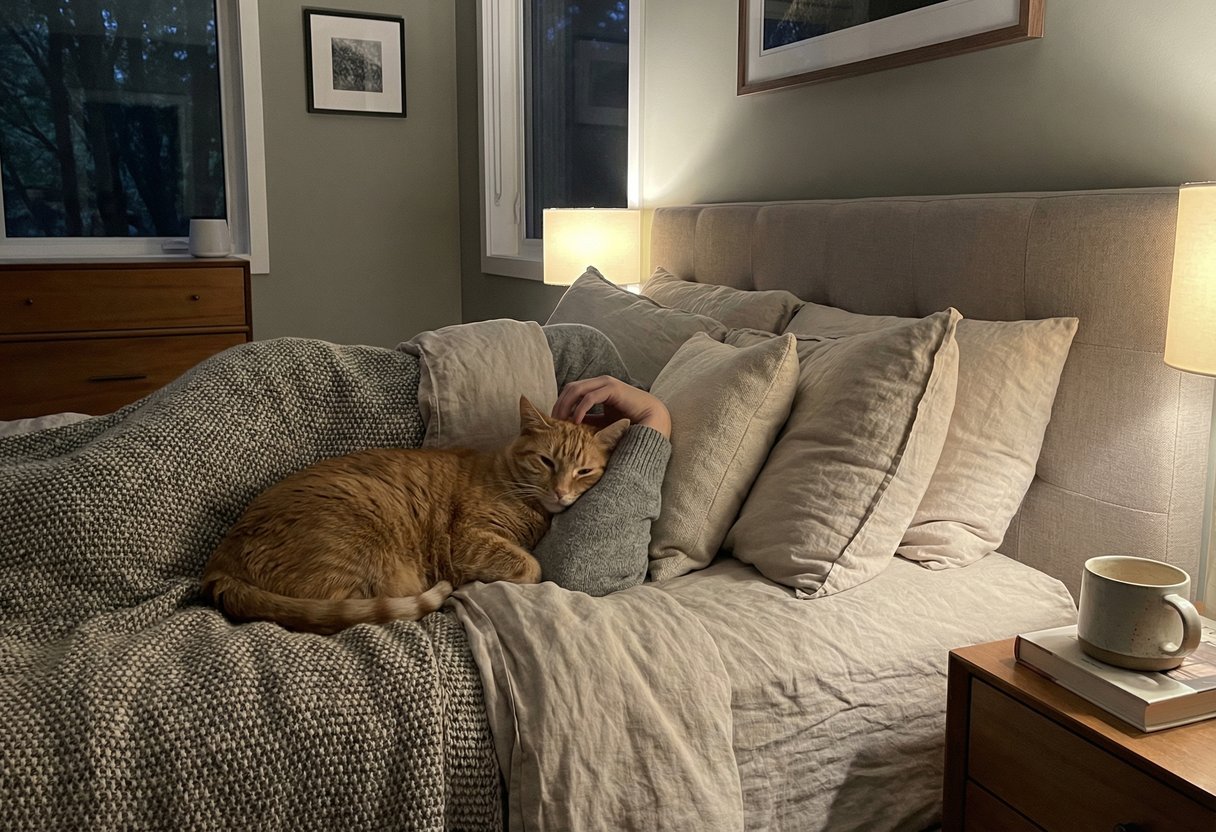
Night after night, cats pad across the duvet and settle beside their humans, turning bedrooms into contested yet comforting territory. What drives that routine runs deeper than habit, touching on behavior, social ties and the way domestic space is shared. As home life evolves with remote work and closer pet attachment, the stakes reach beyond cute rituals to sleep, wellbeing and household peace. Specialists are mapping the patterns and the trade offs, while owners look for calm, cat friendly fixes that let everyone rest.
Striking numbers: how often do we share our bed with cats?
More than half of cat owners — 62 percent — share their bed at least 3 nights a week, according to a new Utrecht University survey. But why do cats seek out our bed so often?
- Unable to find buyer, they offer their 1,400-square-foot apartment in a 10-dollars raffle
Unable to find buyer, they offer their 1,400-square-foot apartment in a 10-dollars raffle
- Don’t cut down your dead trees, they’re essential for the survival of many bird species
Don’t cut down your dead trees, they’re essential for the survival of many bird species
Behavior expert Marieke van der Veer at the Netherlands Institute for Animal Behavior (NID) says the figures reflect a deep social and territorial bond. Sleeping close consolidates a shared territory and signals trust, patterns that build over weeks.
Warmth, safety and instinct: what drives the behavior?
Cats are heat seekers. With a preferred temperature around 38 degrees Celsius (100.4 Fahrenheit), your duvet is a reliable radiator. They also conserve warmth by choosing soft, insulated surfaces—mattresses, pillows, folded blankets.
Safety matters as much as heat. Behaviorists note cats often select a specific person who feels predictable, calm, and protective. In many homes that becomes the anchor spot at night, often the same side of the bed, night after night.
Stress relief and social bond: more than comfort
A 2025 study from the Faculty of Veterinary Medicine in Ghent found cats using proximity to dampen stress, with heart rates dropping during rest near favored humans and an average 18 percent reduction in observable stress behaviors. The physiological effect aligns with owners’ reports of calmer routines.
The pandemic normalized all-day togetherness, and hybrid work kept it going. Many cats now time their sleep to human routines, a synchrony that benefits bonding but can fray when schedules shift.
Territoriality and bedroom challenges
Affection blends with territoriality. Beds become scent-marked through facial and paw glands, effectively claimed property. In multi-cat homes that claim can trigger rivalry or bedtime shoving matches.
Van der Veer notes that insistent meowing, head-butting for space, or sleeping on your face may signal underlying stress. Discrete interventions help: set consistent lights-out, add a warm bed at pillow height, and close off contested zones when tensions rise.
- For just €7, this IKEA sensor instantly alerts you when a door or window is opened
For just €7, this IKEA sensor instantly alerts you when a door or window is opened
- I thought my orchid was doomed until this trick revived its bloom in 24 hours
I thought my orchid was doomed until this trick revived its bloom in 24 hours
Co-sleeping and the ethical trade-off
Co-sleeping feels cozy, yet there are trade-offs: allergies, hygiene concerns, and owner sleep fragmentation. Animal-welfare groups stress balance—respect the cat’s need for security while protecting your respiratory health and rest.
Experts advise a steady evening routine, richer daytime play, and feeding schedules that end well before lights-out. If you need distance, try a heated pad or plush nest near the headboard; you keep proximity without fur on the sheets.