
Across gardens and sidewalks, more people are coming across hedgehogs moving slowly in broad daylight, and well‑meaning rescue attempts often miss the mark. Sophie’s encounter with a sagging little ball of spines captures the confusion over what to offer, and how to offer it, when every minute seems to matter. Specialists highlight simple, accessible ways to support a weakened animal, along with careful feeding tactics and clear next steps if apathy lingers. Knowing when to shift from quick home help to contacting wildlife care professionals can make the difference between a setback and a second chance.
An unexpected encounter with a hedgehog in need
Mid-afternoon, a small hedgehog staggers across the patio, sides heaving, eyes dull. Most hedgehogs are active at night, so daylight often signals trouble. Sophie, a loyal reader, found one just like this and did what many would do without thinking: she reached for a saucer of milk. Who wouldn’t try the quickest comfort on hand? The gesture felt kind, but it made the animal worse.
- Unable to find buyer, they offer their 1,400-square-foot apartment in a 10-dollars raffle
Unable to find buyer, they offer their 1,400-square-foot apartment in a 10-dollars raffle
- Don’t cut down your dead trees, they’re essential for the survival of many bird species
Don’t cut down your dead trees, they’re essential for the survival of many bird species
Why milk is a bad idea for hedgehogs
Hedgehogs are lactose intolerant. Cow’s milk can trigger violent diarrhea and rapid dehydration, sometimes within 24 hours, which can be fatal. Wildlife veterinarians consistently warn against it, especially for animals already weak from cold, hunger, or parasites. Offer water only to drink, in a shallow dish the animal can reach without effort.
What should you give instead?
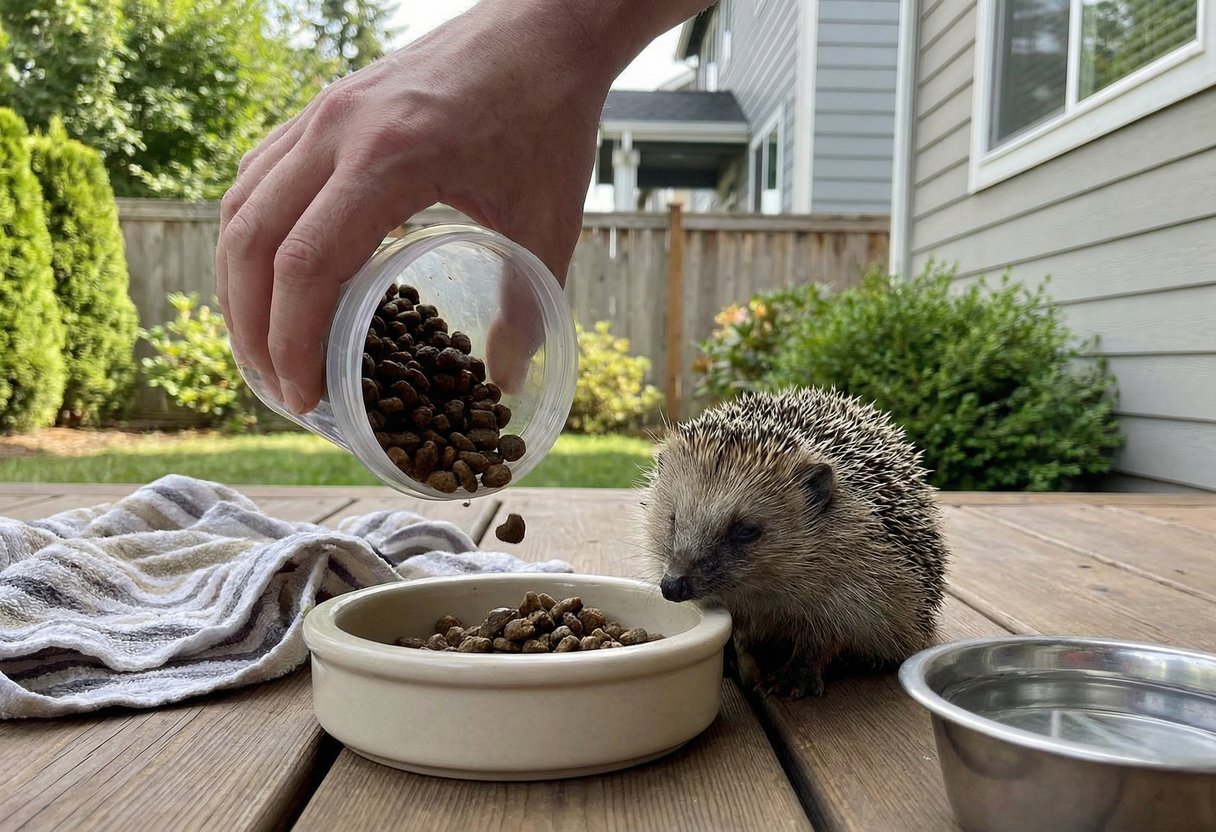
The simplest fix is often in your kitchen: cat kibble with chicken. It’s protein-dense, low in sugar, and matches the hedgehog’s insect-rich diet. Serve a small portion, about 20 to 30 g, and always put fresh water nearby. If the animal seems young or struggles to chew, soak the kibble for 10 minutes in warm water to add hydration and soften the bite. Skip fish recipes, which can be harder on digestion and less readily accepted.
- For just €7, this IKEA sensor instantly alerts you when a door or window is opened
For just €7, this IKEA sensor instantly alerts you when a door or window is opened
- I thought my orchid was doomed until this trick revived its bloom in 24 hours
I thought my orchid was doomed until this trick revived its bloom in 24 hours
Better safe than sorry: extra tips
If the hedgehog remains limp, feels cold, shows wounds, maggots, or labored breathing, move it to a ventilated box lined with a towel, add a wrapped warm bottle, and call a local wildlife rescue. Hedgehogs are wild animals; feeding is first aid, not adoption. Youngsters that haven’t reached roughly 600 g before winter often need specialist care. Kitten milk replacer should be used only under guidance from a rehab center. Keep dishes spotless and rinse with boiling water daily to reduce salmonella risk. Small, steady help—warmth, water, and the right ration—can turn a crisis into a second chance.