
Cholesterol sits at the crossroads of daily diet and heart risk, and even modest shifts in what we eat can change the picture. Research is spotlighting a familiar pantry ingredient with a fast effect on blood lipids, with the gut microbiome emerging as a key player. Elevated levels still spell trouble for the heart, making food choices more than a matter of taste. Together the data and the kitchen offer a path that is simple, specific, and rooted in evidence.
a small change, a big effect
Within 48 hours of swapping your usual breakfast for flocons d’avoine—plain old rolled oats—lab numbers can move. how fast can food shift cholesterol? Faster than many expect, according to new findings that track immediate biological responses to dietary tweaks. The humble grain, inexpensive and easy to find, shows measurable benefits for people wrestling with elevated cholesterol.
- Unable to find buyer, they offer their 1,400-square-foot apartment in a 10-dollars raffle
Unable to find buyer, they offer their 1,400-square-foot apartment in a 10-dollars raffle
- Don’t cut down your dead trees, they’re essential for the survival of many bird species
Don’t cut down your dead trees, they’re essential for the survival of many bird species
the risks of cholesterol out of balance
Cholesterol supports hormone production and cell membranes, yet excess LDL remains a major driver of cardiovascular disease. Hypercholesterolemia raises the odds of heart attack and stroke, still leading causes of death worldwide. Physician and nutrition expert Jimmy Mohammed has repeatedly emphasized that rethinking daily meals is a first line of prevention, especially when paired with exercise and medical follow-up.
why oats work
Oats deliver soluble fibers called beta-glucans that bind bile acids in the gut. That prompts the liver to pull more cholesterol from the bloodstream to make new bile, nudging LDL lower. Researchers reporting in Nature Communications observed that dietary interventions centered on oats changed lipid markers within 48 hours, with evidence pointing to interactions between circulating metabolites and the gut microbiome. This is not a silver bullet—medication remains essential for some—but it is a fast, low-cost lever with a solid physiological rationale.
- For just €7, this IKEA sensor instantly alerts you when a door or window is opened
For just €7, this IKEA sensor instantly alerts you when a door or window is opened
- I thought my orchid was doomed until this trick revived its bloom in 24 hours
I thought my orchid was doomed until this trick revived its bloom in 24 hours
how to add oats to your meals
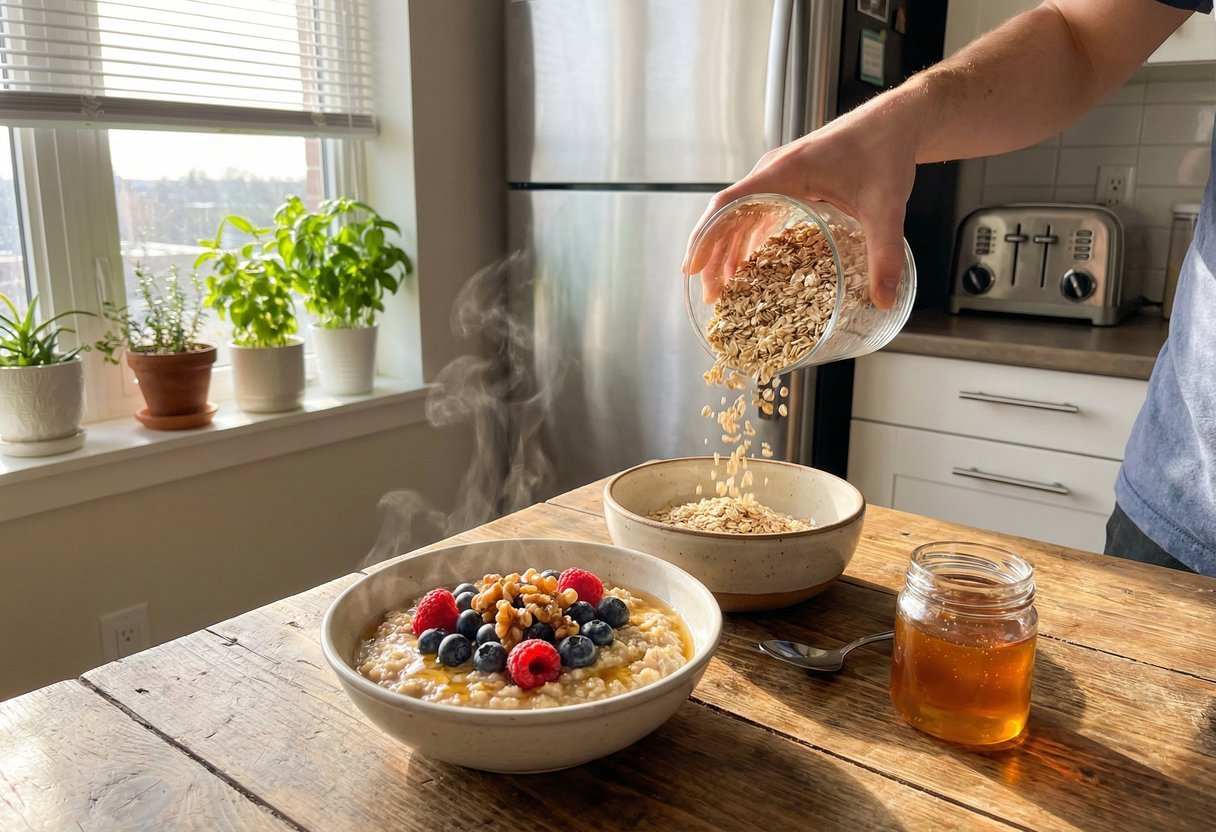
The simplest path is a warm bowl of oatmeal topped with berries and nuts, or overnight oats with yogurt and seeds. Prefer savory? Stir oats into soups as a thickener, fold them into veggie patties, or toast them for a crunchy salad topper. Many guidelines align around getting about 3 grams of beta‑glucan per day from oats, which you can reach with 2 moderate servings of rolled or steel‑cut oats. If you’re curious about short, intensive trials, one study arm used 100 grams of oats 3 times per day—strict, but illuminating on speed of effect.