
Orchids are the showstoppers of the windowsill, yet few plants make home growers work harder for flowers all year. On TikTok in 2026, gardening creator @eart_extracts has ignited a fresh wave of orchid care, turning everyday watering and fertiliser habits into must-watch guidance. The buzz has drawn expert scrutiny from horticultural voices, including the Royal Horticultural Society, sharpening the focus on how to keep these divas on schedule. Alongside pro tips, we also examine the appeal of simple natural boosters such as milk or cinnamon, and what they might mean for your next flush of blooms.
Orchids: gorgeous, but demanding
The allure is instant: sculptural stems, waxy petals, colors that look painted on. Yet once the first flush fades, many owners stall at the same hurdle—getting a reluctant Phalaenopsis to push new spikes. These epiphytes evolved on trees, not in soil, and ask for bright, indirect light, open bark, and a watering rhythm that favors consistency over quantity.
- Unable to find buyer, they offer their 1,400-square-foot apartment in a 10-dollars raffle
Unable to find buyer, they offer their 1,400-square-foot apartment in a 10-dollars raffle
- Don’t cut down your dead trees, they’re essential for the survival of many bird species
Don’t cut down your dead trees, they’re essential for the survival of many bird species
The TikTok trick from @eart_extracts
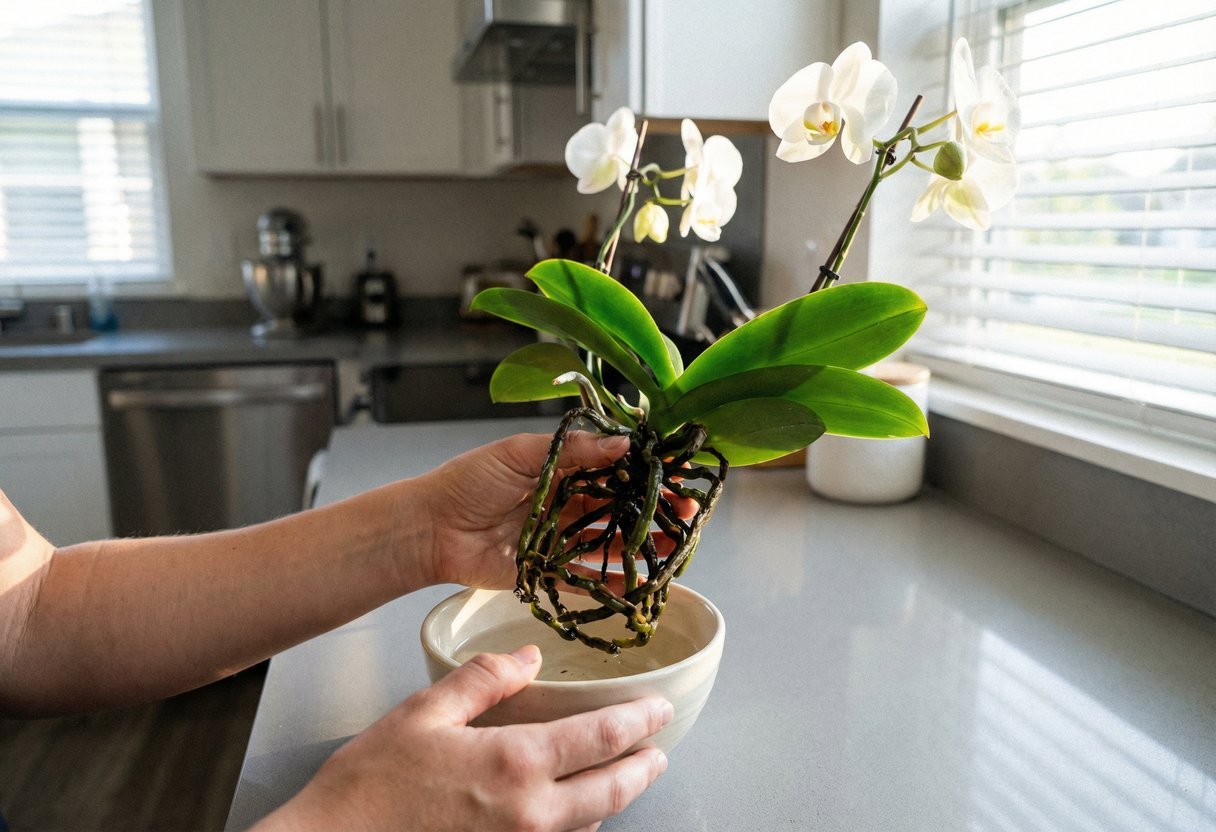
On TikTok, creator @eart_extracts—followed by more than 1 million—has sparked a wave of orchid experimentation. Her routine is disarmingly simple: soak the roots in lukewarm water for about 5 minutes, let them drain, then mist leaves, roots, and spikes once a week with a diluted fertilizer solution. She also leans on natural add‑ons and says her plant has kept blooming for over a year, nudging out fresh buds as older flowers fade. Results vary, but the method hinges on gentle hydration and light, regular feeding.
Expert advice: nutrition makes the difference
The Royal Horticultural Society echoes the “little and often” approach. Orchids benefit from a balanced orchid fertilizer applied at low strength during active growth, avoiding heavy chemical doses that can scorch roots. Salts build up over time, so experts recommend flushing the pot with plain water roughly every 3 to 4 waterings to reset the medium. Good care also means steady light, stable temperatures, and letting the bark dry slightly between waterings.
Try natural alternatives
For a softer touch, the Napa Valley Orchid Society lists household stand‑ins that many growers swear by. A diluted milk solution can add calcium and sugars that support root vigor, while horticulturist Russell Birchell advises equal parts milk and water as a leaf spray if you suspect fungal pressure. A light dusting of ground cinnamon on fresh cuts is a familiar bench trick—an old‑school, low‑cost step that helps keep trouble at bay.
- For just €7, this IKEA sensor instantly alerts you when a door or window is opened
For just €7, this IKEA sensor instantly alerts you when a door or window is opened
- Why a dog that never barks immediately alerts veterinarians
Why a dog that never barks immediately alerts veterinarians
From challenge to success
A few habit changes unlock the cycle: repot every 12 to 18 months into fresh bark, give bright east or shaded south light, and aim for roughly 40 to 60 percent humidity with occasional airflow. Watch the roots—their silvery green shift after watering is a better gauge than the calendar. Stay patient, feed lightly, and flush salts, and your plant will return the favor with spikes that last for months. And when those buds finally crack open again, isn’t that quiet defiance part of why you kept the orchid in the first place?