
Hard water leaves a chalky film that dulls sinks and taps, and the fix often comes in bottles loaded with harsh chemistry. As worries mount about what those formulas do to our homes and the environment, the hunt for gentler options has accelerated. A pared-back scouring cream made from simple pantry items is gaining ground as a thrifty, natural alternative that cuts waste. Handle it carefully on delicate surfaces, and routine scrubbing starts to look cleaner for both the house and the planet.
The hidden impact of limescale and chemical cleaners
Cloudy shower glass and chalky rings on faucets show up fast when you live with hard water. The supermarket spray cuts through it, but at what cost to your lungs and waterways?
- Unable to find buyer, they offer their 1,400-square-foot apartment in a 10-dollars raffle
Unable to find buyer, they offer their 1,400-square-foot apartment in a 10-dollars raffle
- Don’t cut down your dead trees, they’re essential for the survival of many bird species
Don’t cut down your dead trees, they’re essential for the survival of many bird species
France’s ADEME has warned that common descalers emit volatile compounds and leave residues that burden wastewater systems. Several formulas have used solid scrub particles, sometimes microplastics, that slip past filtration. A short-ingredient alternative—baking soda and Marseille soap—reduces that footprint without sacrificing cleaning power.
Simple, effective, affordable: a scrub cream recipe
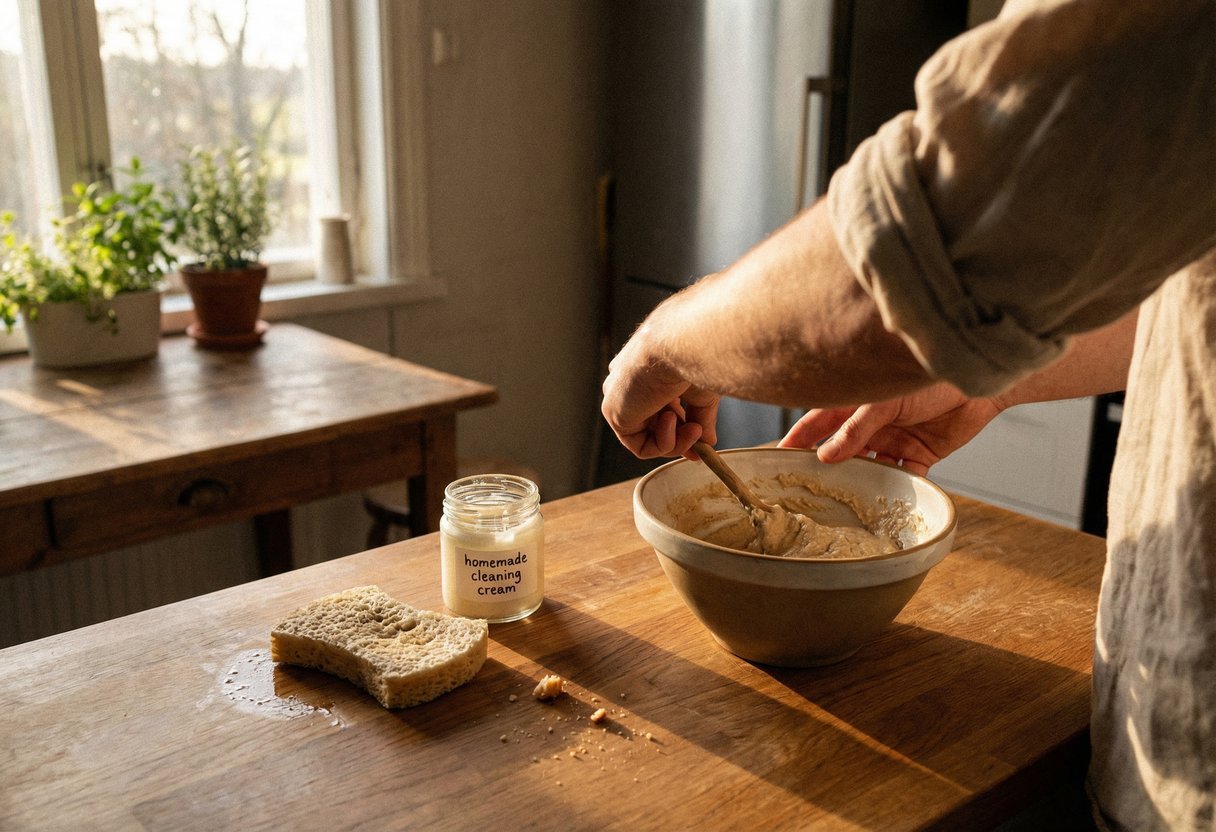
If you want a gentler routine, this kitchen-made cream relies on 3 basics. It is quick to mix, easy to store, and works across most bathroom and kitchen surfaces.
- Need: 2 tablespoons baking soda, 1 tablespoon finely grated Marseille soap, 50 ml warm water, 3–5 drops essential oil (optional).
- Method: Dissolve the grated soap in warm water, then whisk in baking soda until smooth and creamy. Add essential oil if you like.
- Storage: Spoon into a lidded jar; it keeps for weeks. Stir if it firms up.
How to use the cream well
Apply a small dab to a damp sponge or soft cloth and spread over the scale. Let it sit 5 minutes to loosen mineral deposits while the soap lifts grime. The baking soda provides a fine, non-scratching abrasive that helps the film break away.
Rinse thoroughly with warm water, then dry with a microfiber cloth to prevent new spots. On chrome, ceramic, glass, and stainless steel, you will see the sheen return with minimal effort.
- For just €7, this IKEA sensor instantly alerts you when a door or window is opened
For just €7, this IKEA sensor instantly alerts you when a door or window is opened
- I thought my orchid was doomed until this trick revived its bloom in 24 hours
I thought my orchid was doomed until this trick revived its bloom in 24 hours
Tips and what to watch out for
Be cautious on sensitive materials. Avoid use on marble and other calcareous stone, which can etch, and go light on aluminum, which may dull. When in doubt, test on a discreet corner and use only gentle pressure.
This switch cuts packaging waste, avoids plastic beads, and reduces indoor fumes. A jar costs well under 1 dollar to make, delivers repeat cleanings, and pares your product shelf to the essentials. Keep the lid closed between uses and store at room temperature for a steady, ready-to-scoop texture.