

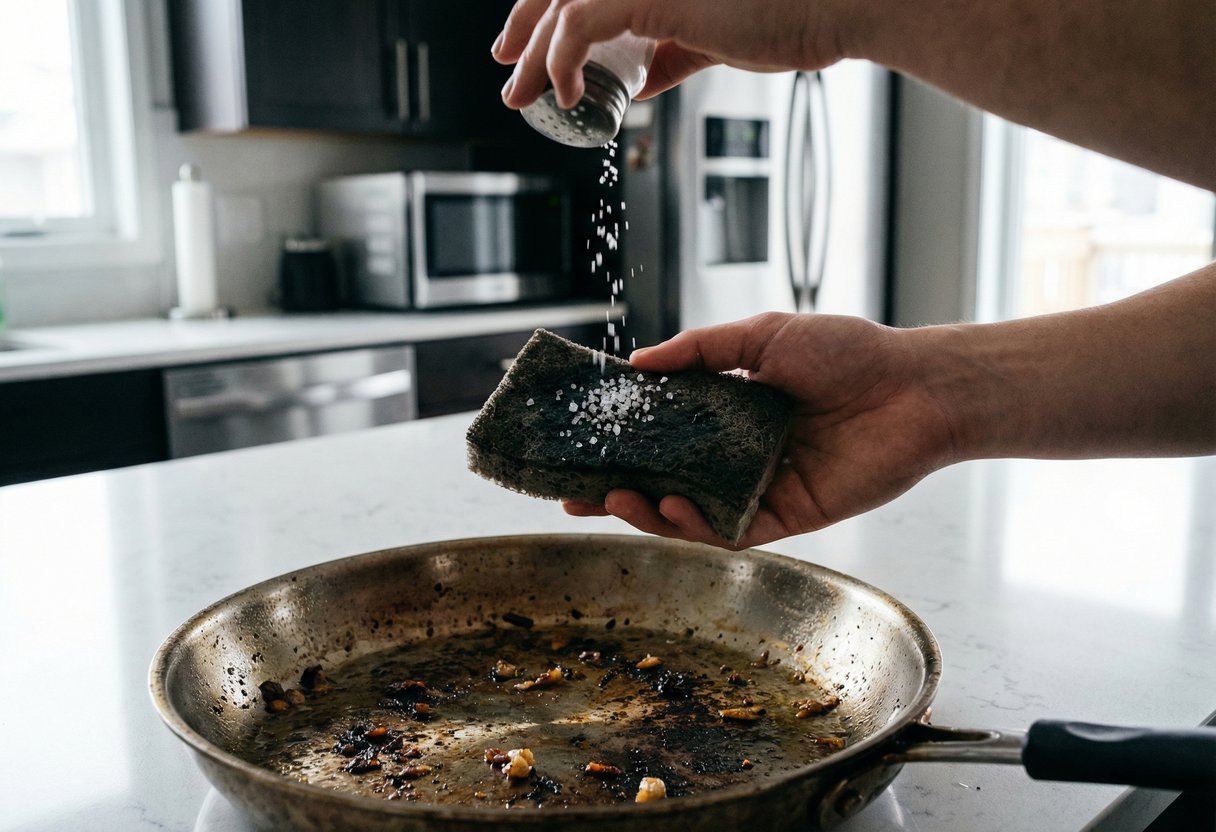
One small tweak to your sponge, powered by a pantry basic, puts everyday cleaning on a thriftier and greener footing. It helps cut through grease, tame stubborn odours and discourage microbes that thrive on damp surfaces. The method slips neatly into a weekly routine and suits the usual suspects in the kitchen, from cookware to chopping boards. There are sensible caveats for delicate coatings, and the approach can be paired with familiar household ingredients when extra oomph is needed.
Why table salt is a powerful cleaning helper
A pinch of table salt on a damp sponge strips grease from a frying pan in under 30 seconds. The crystals act as a mild abrasive, scraping residue without the harshness of steel wool. Salt also draws out moisture at the surface, making it harder for bacteria and molds to thrive between cleanings. It’s cheap, shelf-stable, and rinses clean, which is why so many home cooks keep it within arm’s reach.
- Unable to find buyer, they offer their 1,400-square-foot apartment in a 10-dollars raffle
Unable to find buyer, they offer their 1,400-square-foot apartment in a 10-dollars raffle
- Don’t cut down your dead trees, they’re essential for the survival of many bird species
Don’t cut down your dead trees, they’re essential for the survival of many bird species
Versatile uses in the kitchen
Lightly wet a sponge, sprinkle on 1/2 teaspoon of coarse salt, and go after baked-on oil on pans and casserole dishes. Knives, cutting boards, and glass jars benefit too: the salt lifts film, tames odors, and gives dull surfaces a second life. Aim for weekly maintenance on high-use items and always rinse with warm water afterward. Skip nonstick coatings and very soft plastics—salt can scratch—because a fix shouldn’t create a new problem. Who needs a shelf of pricey sprays when one pantry staple does the heavy lifting?
Salt paired with other helpers
Combine salt with vinegar to tackle limescale around sinks and faucets. The acid softens mineral deposits while the crystals add mechanical bite, especially on stainless steel rims and tile grout. For cloudy glass or smudged stainless, add a little baking soda to form a paste, spread, let sit 3–5 minutes, then scrub lightly and rinse. These simple mixes punch above their weight and reduce the need for specialty cleaners you’ll use twice a year.
- For just €7, this IKEA sensor instantly alerts you when a door or window is opened
For just €7, this IKEA sensor instantly alerts you when a door or window is opened
- I thought my orchid was doomed until this trick revived its bloom in 24 hours
I thought my orchid was doomed until this trick revived its bloom in 24 hours
Tips to get the most from salt as a cleaner
Start small: use 1/2 teaspoon of salt on a damp sponge and test an inconspicuous patch before committing. Work with gentle, circular strokes, then rinse thoroughly so stray crystals don’t dull a finish. If a spot resists, add a drop of dish soap after the first pass and re-rinse. Dry metal surfaces promptly to discourage water spots.
Freshen the sponge itself with salt. Massage in a few coarse grains, wait 5–10 minutes, and rinse until the water runs clear. For deeper care, dissolve 1 tablespoon of salt in 1 cup warm water, submerge the sponge for 10 minutes, then wring and air-dry upright. Replace worn sponges regularly—every 2–3 weeks in busy kitchens—to keep odors and buildup from creeping back.