
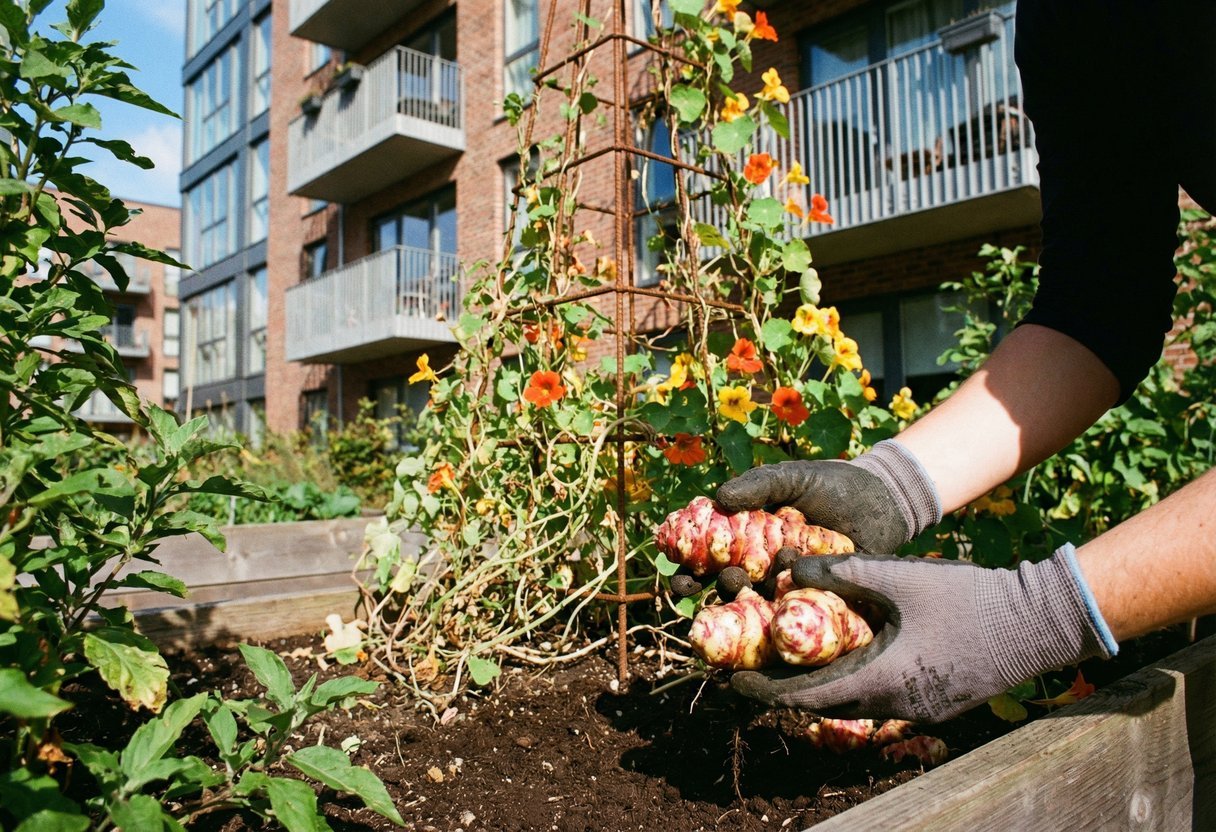
A little-known Andean root is quietly stirring up home gardens. Known as mashua or the tuberous nasturtium, it pairs striking good looks with the promise of something you can put on the plate. Its rise mirrors a broader appetite for resilient, biodiversity-friendly crops in backyard plots. With every new trial, the same question keeps resurfacing, and it is only adding to the fascination.
De vergeten Andes-knol die tuiniers blijft verbazen
At the back of a compact city plot, a cascade of orange and yellow trumpets climbs a wire trellis, disguising the harvest beneath. This is capucine tubéreuse, better known as mashua, a vining staple native to the Andes of South America. Cultivated for food by Indigenous communities for centuries, it offers flowers for the eye and tubers for the plate. How did this quiet climber become a conversation piece from allotments to chef kitchens?
- Unable to find buyer, they offer their 1,400-square-foot apartment in a 10-dollars raffle
Unable to find buyer, they offer their 1,400-square-foot apartment in a 10-dollars raffle
- Don’t cut down your dead trees, they’re essential for the survival of many bird species
Don’t cut down your dead trees, they’re essential for the survival of many bird species
De bijzondere capucine tubéreuse
Mashua is a vigorous nasturtium relative that pairs ornament with utility. Its blooms echo the familiar garden nasturtium, while underground it fattens knobby, often streaked tubers rich in carbohydrates and micronutrients. Raw, the tuber carries a peppery snap akin to radish or mustard; cooked, the flavor mellows toward potato with a light sweetness. Leaves and blossoms are also edible, a garden-to-table flourish that rarely goes to waste.
Waarom deze plant uniek is
Few plants deliver such dual charisma: showy flowers up top, a pantry of tubers below. The bite of raw mashua lifts salads, while roasting or steaming turns it soft and nutty, ready for purées or hearty stews. Its greens tuck neatly into omelets and herb butters, and the flowers garnish without pretense. This breadth makes the tuber a compact, all-parts-edible staple for small spaces.
Zelf kweken: hoe doe je dat?
Mashua thrives in well‑drained soil and full sun to half shade, with a trellis or fence for its scrambling vines. Plant tubers in spring after frost, spacing 50 to 80 centimeters to keep air moving and foliage dry. Keep soil evenly moist and mulch to steady temperatures during summer growth. In 6 to 8 months, as vines tire and days cool, the tubers size up and lift cleanly for the kitchen or storage.
Een ecologische en esthetische aanwinst
The plant’s natural resilience means fewer interventions and a lighter touch with inputs. It resists many common pests and diseases, and its nectar‑rich blossoms bring bees and other helpful pollinators. The result is a low‑maintenance, low‑input crop that earns its keep visually and ecologically.
- For just €7, this IKEA sensor instantly alerts you when a door or window is opened
For just €7, this IKEA sensor instantly alerts you when a door or window is opened
- I thought my orchid was doomed until this trick revived its bloom in 24 hours
I thought my orchid was doomed until this trick revived its bloom in 24 hours
De groeiende fascinatie voor mashua
As gardeners chase resilient, flavorful crops, mashua is stepping into the spotlight. Seed catalogs now feature it beside staple roots, community plots test it on trellises, and chefs slice it thin for crunch or roast it for depth. The plant fits urban balconies as readily as backyard beds, turning vertical space into food. Give it a line to climb and room to root, and it returns the favor by brightening both garden and plate.