

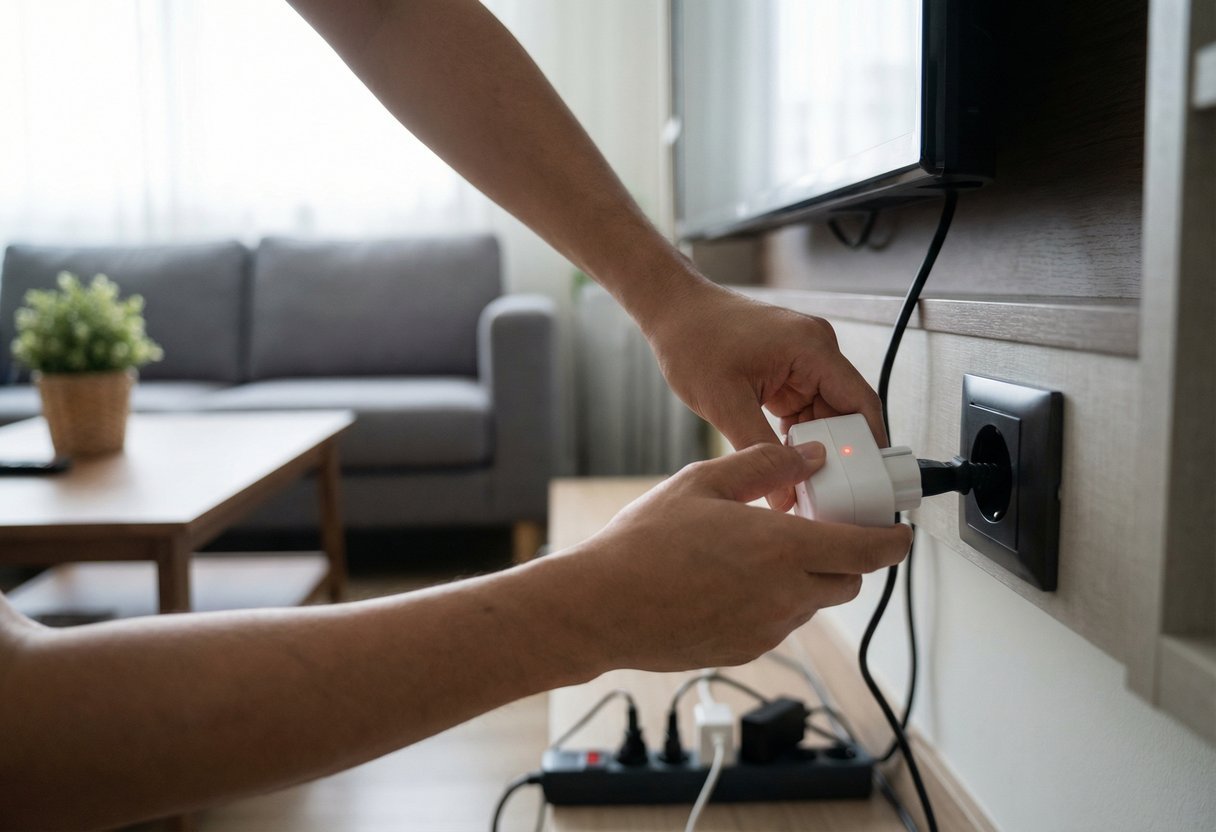
Household power bills are still climbing in 2025, and every kilowatt now feels like a line item worth fighting. A surprising chunk of that spend vanishes while devices sit idle, sipping electricity around the clock. A small add-on promises a painless way to choke off that silent drain, no toolbox required. Start where the plugs pile up, the living room, the home office, the kitchen.
The impact of rising energy prices
Inflation cooled in 2025, but electricity bills did not. Higher grid fees and volatile wholesale markets continue to squeeze households, making monthly budgets feel brittle. When appliances sip power all day, even with screens dark, shaving costs can start with the smallest plug.
- Unable to find buyer, they offer their 1,400-square-foot apartment in a 10-dollars raffle
Unable to find buyer, they offer their 1,400-square-foot apartment in a 10-dollars raffle
- Don’t cut down your dead trees, they’re essential for the survival of many bird species
Don’t cut down your dead trees, they’re essential for the survival of many bird species
What is a standby plug and how does it work?
The standby plug is a simple cutoff adapter, often priced around 5 euros, that slots between an outlet and your device. It cuts power to electronics that would otherwise draw standby power—the “vampire” load from TVs, game consoles, routers, or desktops when they appear off. Some versions add timers or remote controls, but the core idea is blunt and effective. Why pay for power you don’t use?
How much can you really save?
Data from energy providers including Total and France’s ADEME indicate standby loads account for roughly 10 percent of household electricity use. On an annual bill of 1,300 euros, eliminating that waste could unlock about 130 euros. Real savings depend on how many devices you cut and how often they idle, yet the payback is quick: a 5-euro plug can recoup its cost in weeks. The rest of the year is margin.
Where and how to install it?
Start where devices linger on standby the longest. In the living room, target the TV, soundbar, streaming box, and game console; in a home office, look at the desktop, monitor, speakers, and printer; in the kitchen, consider the coffee machine or toaster if they sit idle for hours. Basic models act like an on/off gate; others offer countdowns or schedules for predictable routines.
Retailers carry multiple options, from cutoffs integrated into power strips to single-outlet adapters. Platforms like Greenweez list entry-level units around 5 euros, while pricier versions add meters or app control. Check the maximum load rating before you plug in power-hungry gear, and avoid cutting power to devices that require constant connectivity or updates, such as security hubs.
- For just €7, this IKEA sensor instantly alerts you when a door or window is opened
For just €7, this IKEA sensor instantly alerts you when a door or window is opened
- I thought my orchid was doomed until this trick revived its bloom in 24 hours
I thought my orchid was doomed until this trick revived its bloom in 24 hours
Saving energy can be simple
Pair a standby plug with a switchable power strip to kill clusters of devices at once. Add a smart thermostat or radiator valve to trim heating during work hours, and set washing cycles for off-peak windows if your tariff allows. The playbook is small steps, repeated daily. Over 12 months, those habits turn from modest tweaks into money back in your pocket—and a quieter meter.