

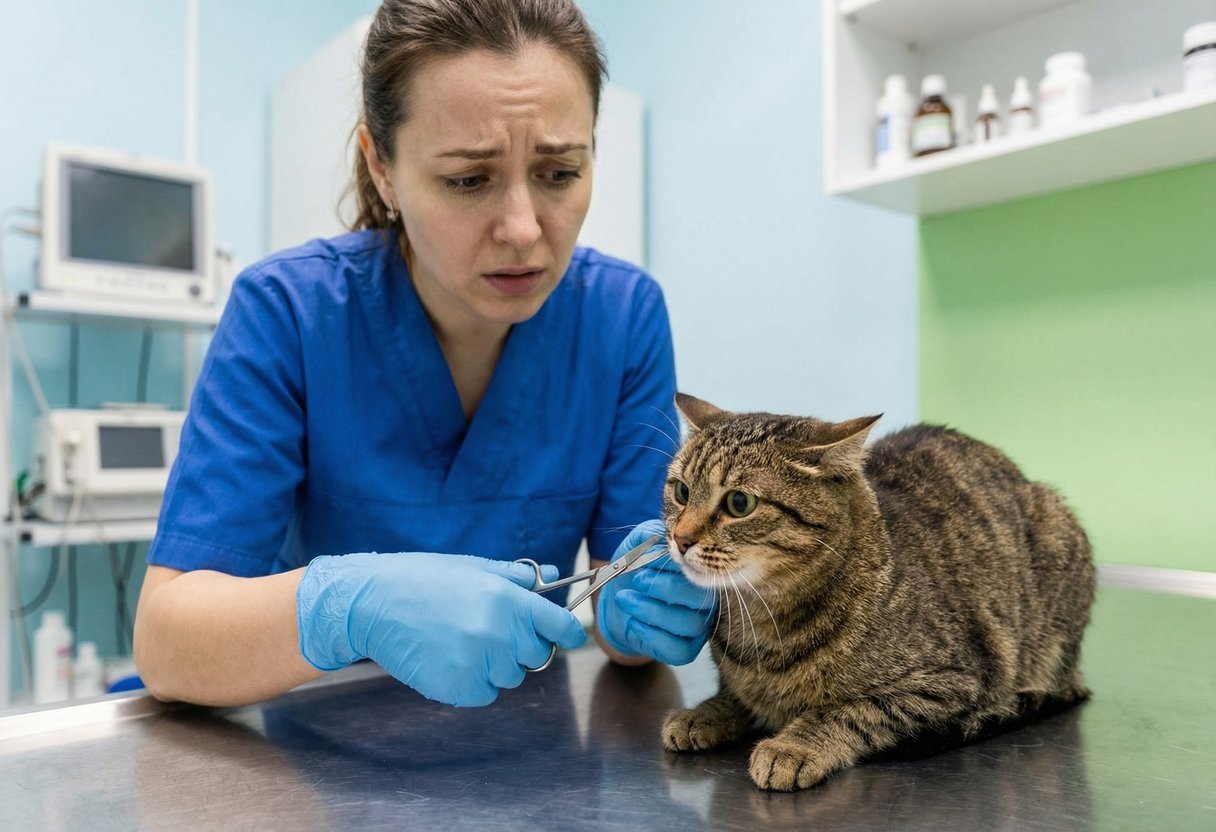
Those whiskers on a cat’s face are not a mere flourish, they quietly shape how the animal makes sense of space. A rise in misguided trims and rough handling has veterinarians speaking up, turning a casual habit into a welfare concern. What hangs in the balance is the way a cat moves, explores and enjoys play, a small feature with an outsized role in daily life.
A cat and its whiskers: more than aesthetics
Minutes after a well‑meaning “trim,” a usually sure‑footed tabby balks at the sofa edge. A cat’s whiskers are not decoration; they are vibrissae, specialized sensors rooted deep in sinus follicles dense with nerves and blood vessels. They sit along the muzzle, above the eyes, and on the forelegs, forming a mesh of detectors that read touch and airflow. Most cats carry 8 to 12 whiskers per side, and each hair talks to the brain with astonishing speed.
- Unable to find buyer, they offer their 1,400-square-foot apartment in a 10-dollars raffle
Unable to find buyer, they offer their 1,400-square-foot apartment in a 10-dollars raffle
- Don’t cut down your dead trees, they’re essential for the survival of many bird species
Don’t cut down your dead trees, they’re essential for the survival of many bird species
Cutting whiskers: the bigger‑than‑you‑think impact
Snipping those sensors scrambles spatial radar. Cats see poorly at close range and lean on whiskers to map tight gaps, judge landings, and guide a paw to prey or a toy. Without them, you get hesitations at jumps, clumsy collisions, and stress signs like hiding or overgrooming. Vets also note misjudged distances and more failed stick‑the‑landing moments after a cut.
Why intact whiskers matter day and night
Whiskers work hardest at dusk and in darkness, where they register tiny pressure shifts that reveal edges, legs, and thresholds. Length often mirrors body width, giving a living gauge for whether a gap is passable. Carpal whiskers on the forelegs refine mid‑pounce adjustments, turning a blur of motion into controlled precision. Imagine moving through your home blindfolded and with dull fingertips—would you still stride with confidence?
- For just €7, this IKEA sensor instantly alerts you when a door or window is opened
For just €7, this IKEA sensor instantly alerts you when a door or window is opened
- I thought my orchid was doomed until this trick revived its bloom in 24 hours
I thought my orchid was doomed until this trick revived its bloom in 24 hours
Veterinary guidance: leave whiskers alone
Good care follows a simple rule: leave whiskers alone. If one sheds naturally, it will regrow, but forced trims can take weeks of orientation to rebound. While you wait, make the world easier to read.
- Never cut, trim, or pluck whiskers, even if they look uneven.
- Avoid tugging or smoothing them during play; teach children hands‑off.
- Choose wide, shallow bowls to reduce “whisker fatigue” from constant rubbing.
- Limit high perches and tricky jumps until full regrowth returns.
- Watch for stumbles, refusal to jump, or night anxiety and call your vet.